
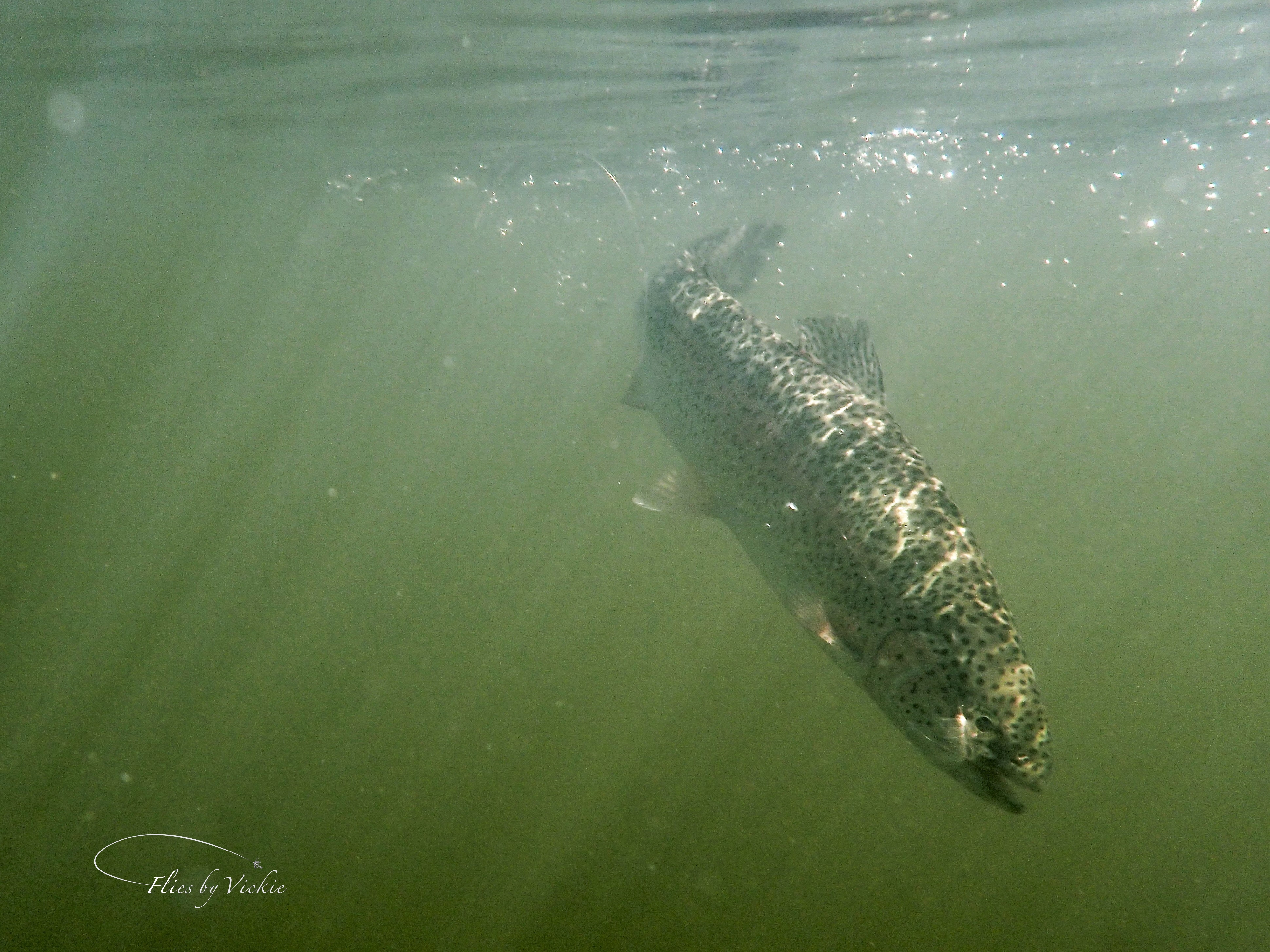
 As opportunistic feeders, trout will prey on a variety of aquatic insects, forage fish, crustaceans, leeches, worms, and terrestrial insects. This article will provide an overview of what trout eat. It will be followed by additional articles providing more detailed information about trout’s primary food: aquatic insects. It is vital to understand where the trout’s prey lives, how it moves, and its life cycle if anglers want to increase their chance of catching trout. Understanding what trout eat is important because it will help dictate line selection, retrieval speed, positioning, and pattern selection.
As an avid hunter of trout, I am captivated by the diversity of aquatic life in stillwater habitats. That rich biodiversity continues to inspire wonder and awe within me. I have watched with fascination ascending chironomids, dancing caddis, mating damsels, and prolific numbers of mayflies in flight. I once witnessed a hatch of small Trico mayflies of such epic proportions that they appeared as a flying rhythmic mass softly blanketing everything it touched.
According to Robert Behnke in his book, Trout and Salmon of North America, (Chanticleer Press, 2002) a trout must consume one percent of its body weight daily to maintain its weight. He considers trout generalists and opportunists, feeding on a variety of prey, depending on what is available.
In a California Fish and Game study of trout food, Michael Swift writes that examining trout stomach contents reveals pupa stages of aquatic insects to be most likely to be preyed upon by trout. Chironomid pupae are readily picked off as they ascend to the surface. Also popular are vulnerable damselfly and dragonfly nymphs as well as caddisfly larvae which all live among aquatic vegetation and rocks.
When Trout Become Selective
When trout do become selective, it is never on a specific insect, but rather on the stage of an insect. For example, during a hatch, the trout’s food preference may shift to the adult stage of an aquatic insect such as a mayfly hatch. It is possible to generate a reactive bite using a fly pattern that is suggestive of nymphal stages, be it pupa, or larva stage. I have found during brief periods of emergence, trout will reject these nymphal stages and focus their attention to the adults lying on the surface.
Questions, or want to book a guided trip? Call Vickie at 503-680-7147 or send a message.
Five Categories of Trout Prey
1. Aquatic Invertebrates
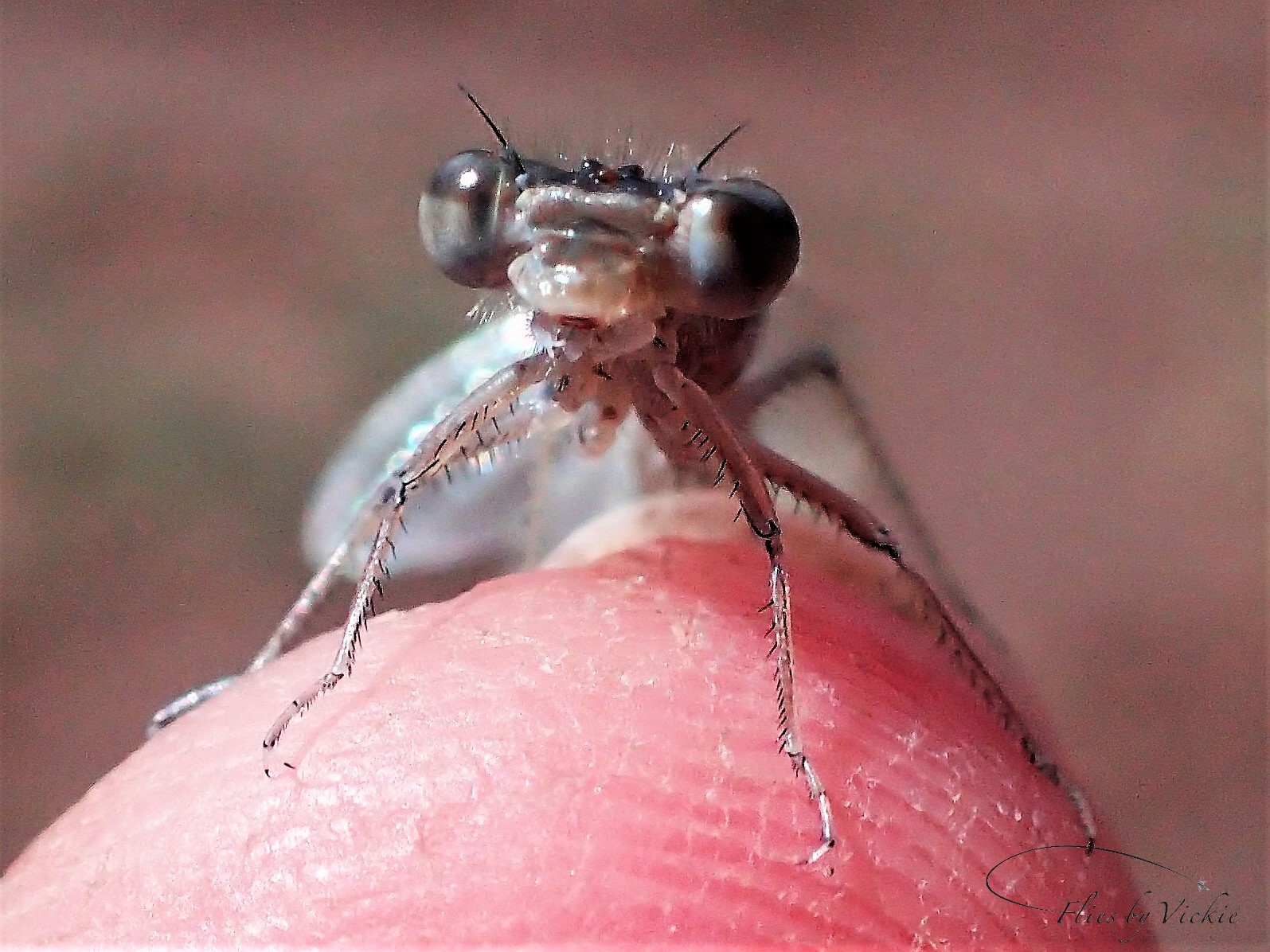
The bulk of what trout eat are aquatic invertebrates (i.e. animals without backbones) such as damsels, chironomids, mayflies and caddis. They provide the main source of food all year long since they spend most of their life in the water in their nymphal, larval or pupal stages. To transition to the adult stage, they must emerge from the water to the surface.
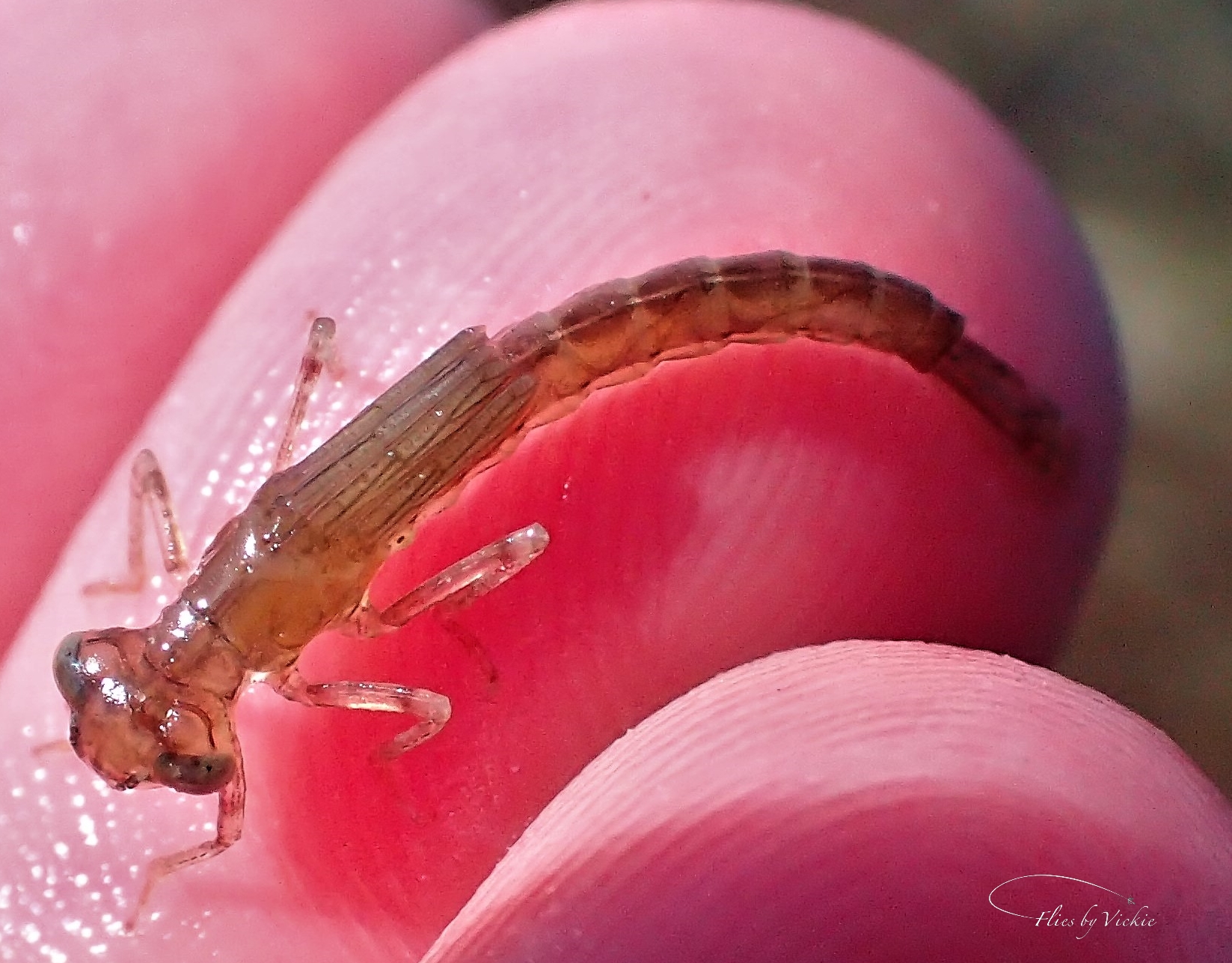
Damsel Nymph
2. Terrestrials
During the warmer months, trout feed on terrestrial insects, including flying ants, grasshoppers, and beetles. I have found that when ants and hoppers are on the water, trout stop eating aquatic insects and target the terrestrials. Therefore, it is wise to carry an assortment of flying ant and hopper patterns in various colors and sizes.
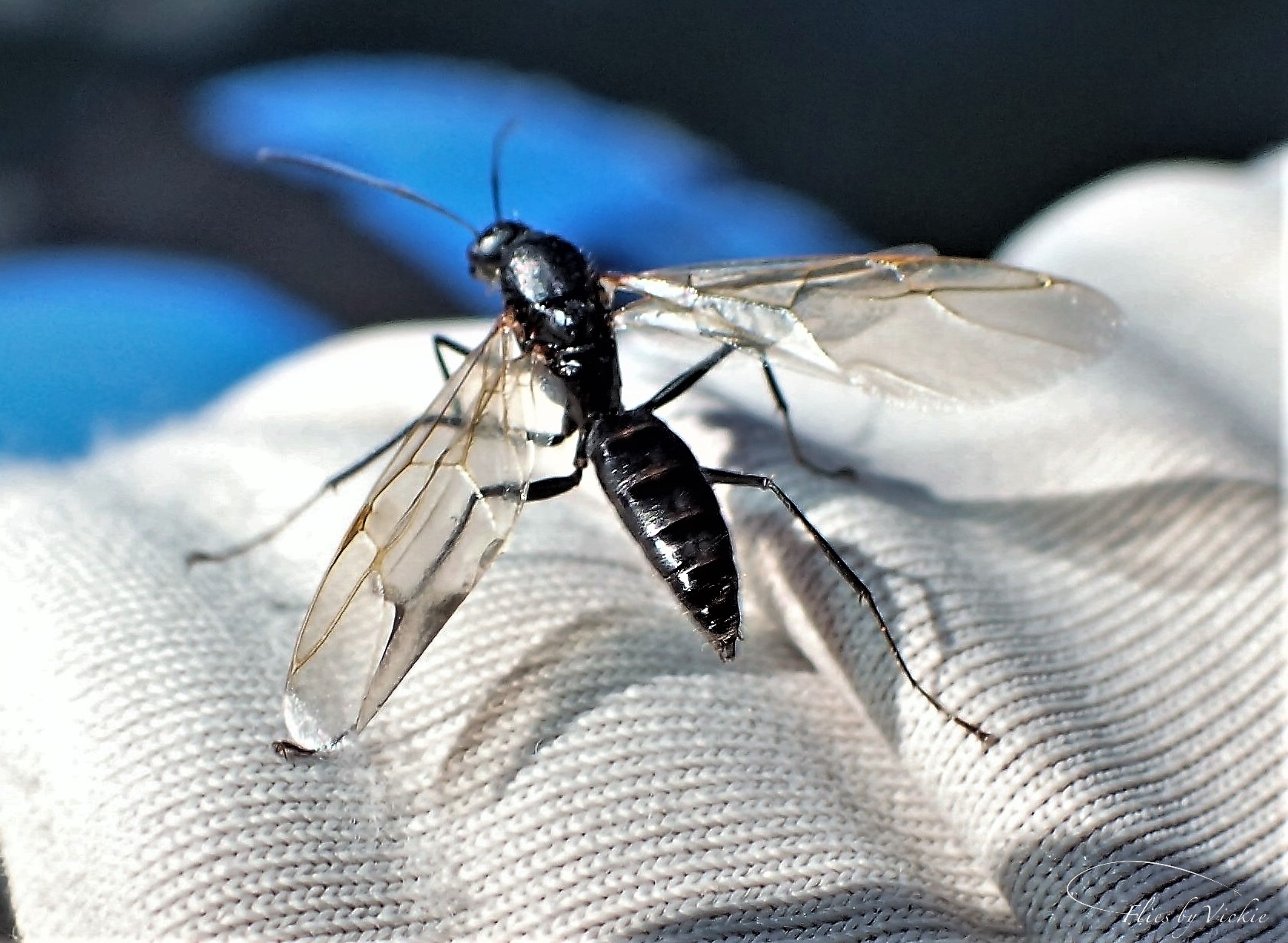
Flying Ant
3. Forage fish & Minnows
As trout grow, their menu expands to include forage fish and minnows, both rich sources of protein. The size of the forage fish consumed is limited by the size of the trout’s mouth; the bigger the mouth, the bigger the prey.
In another study of trout’s stomach contents conducted by the Great Lakes Fishery Laboratory, Joseph Elrod writes that while invertebrates are an important source of food for trout, they become a smaller portion of the trout’s diet. Forage fish were found in a greater percentage in stomach contents of trout that were over 8” in length. It is the minnow that draws trout into the shallows and should draw you there as well!
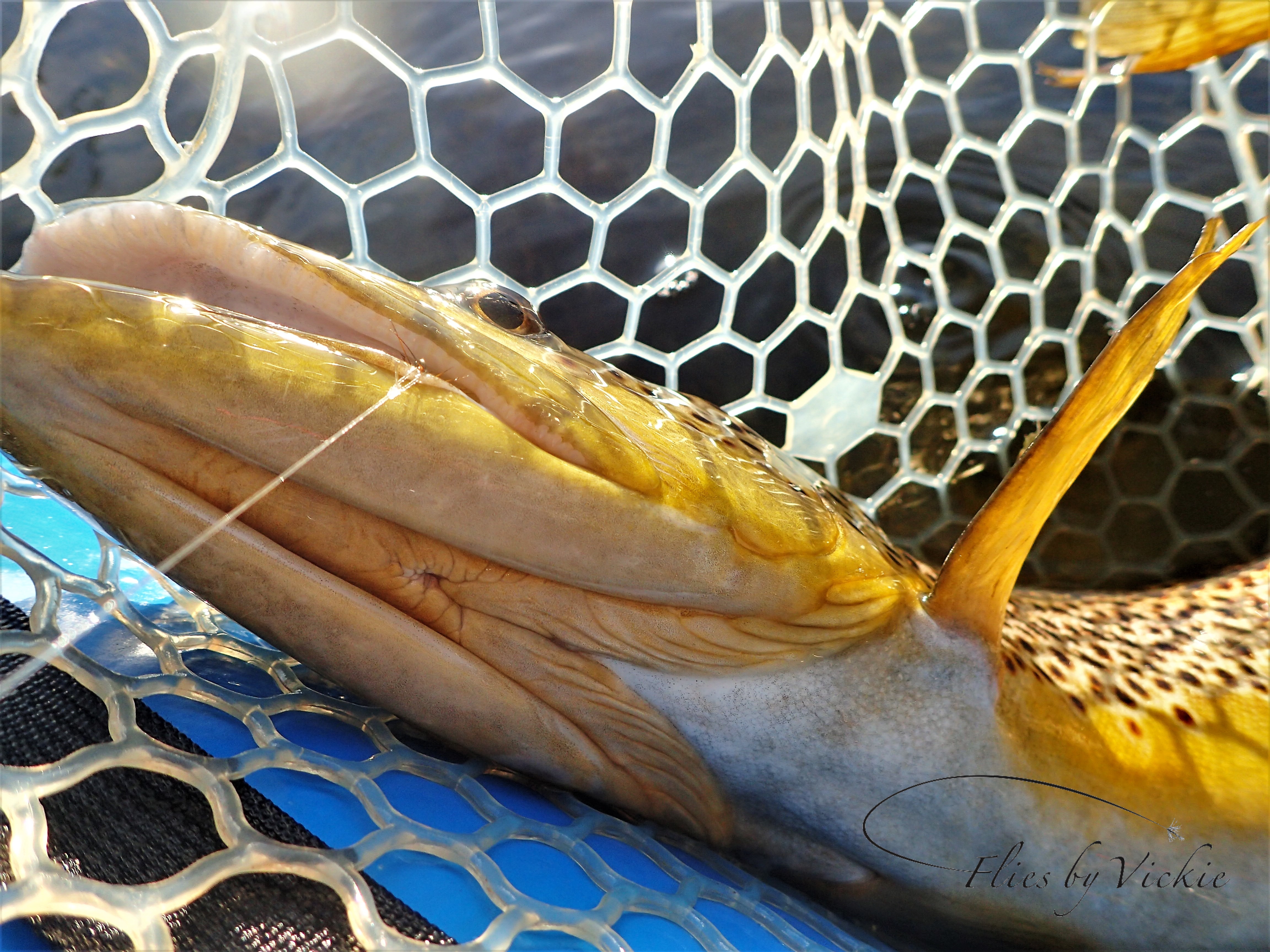
Brown Trout caught on Vickie’s Predator Minnow Pattern
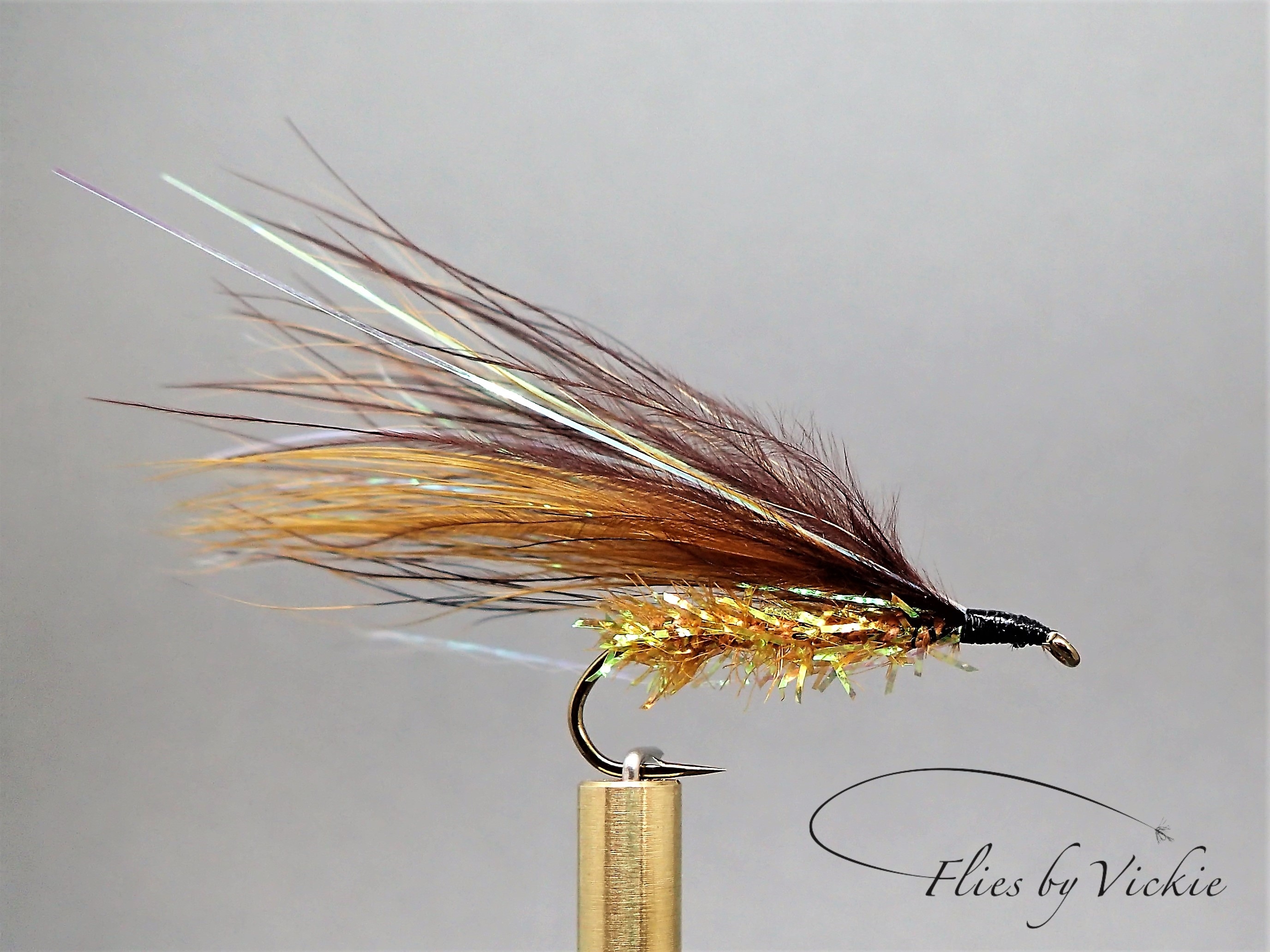
Vickie’s Predator Minnow Pattern
4. Worms
Worms and leeches are found in all types of freshwater including ponds, lakes, streams, and rivers, and are eaten year-round. During the cooler months, when no insects are hatching, trout depend upon leeches as an important source of protein. Leeches are most abundant in the spring and fall.
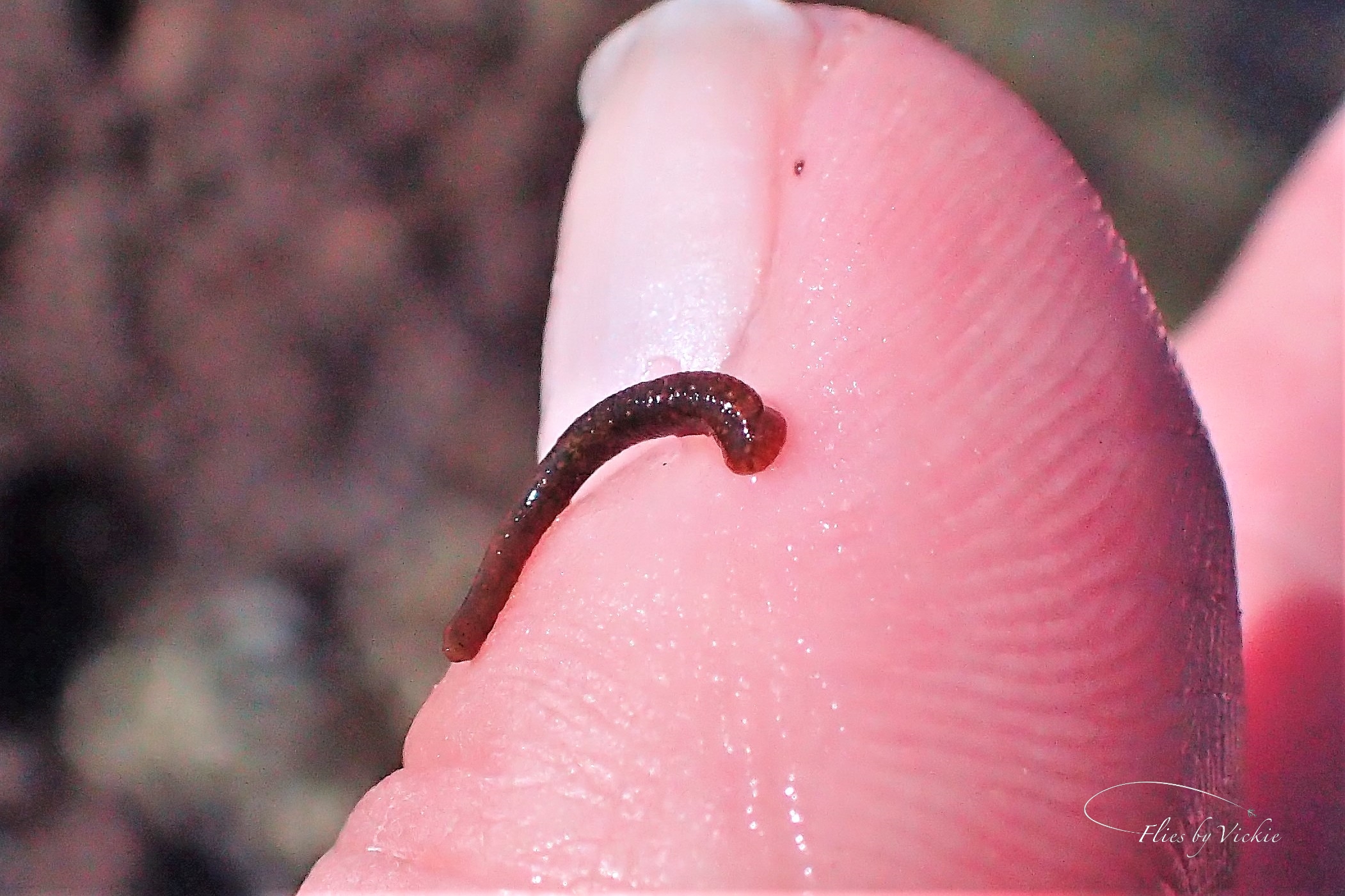
Leech
5. Other
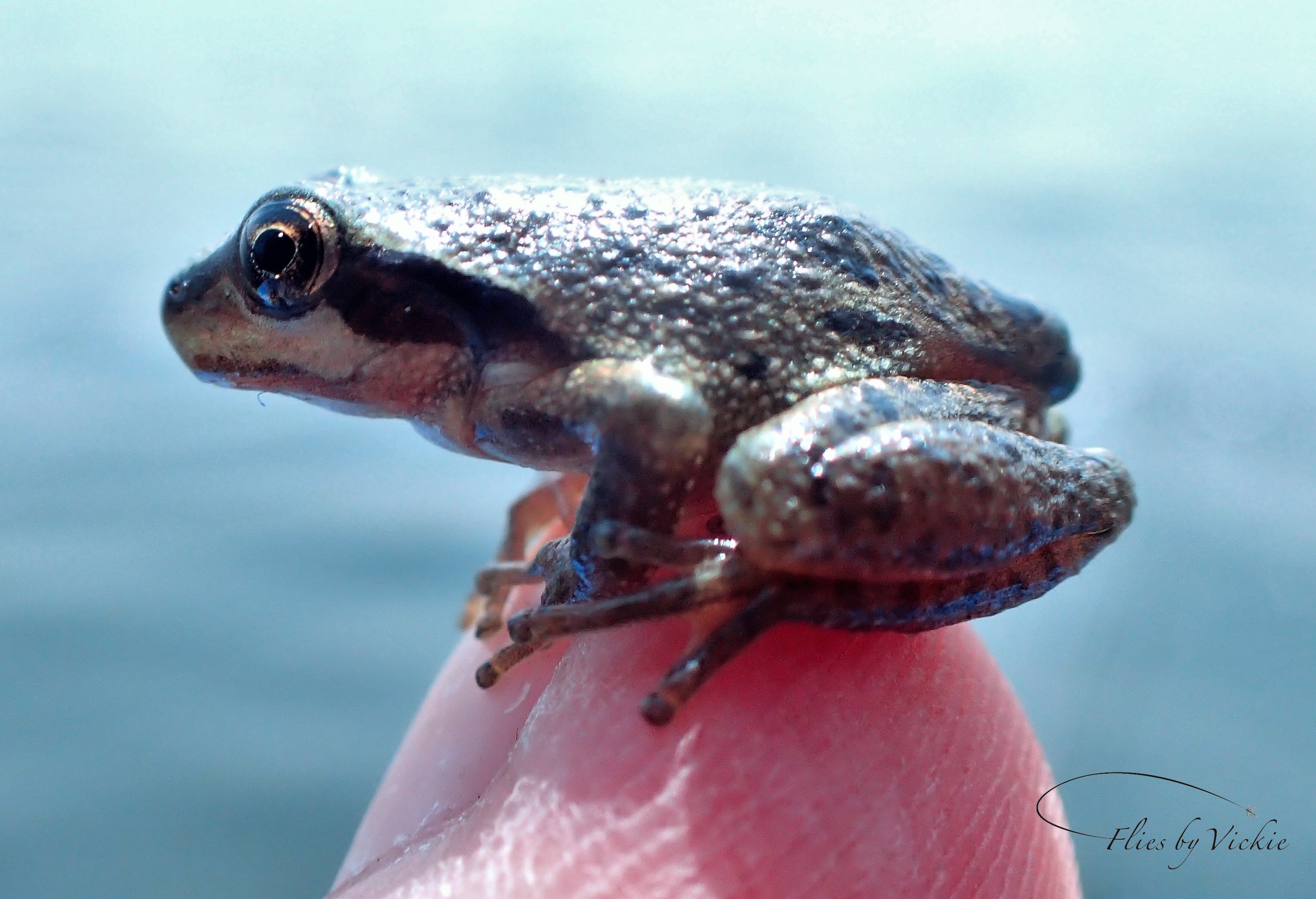
Crustaceans, (scuds, snails, and crayfish) are always on the menu. Fish eggs, worms, small frogs, and the occasional small rodent round out the trout’s diet. Snails are abundant in most shallow nutrient lakes where aquatic vegetation and weed beds are plentiful. Snails help fill a void during the winter months. While they are low in calories, trout eat a lot of them.
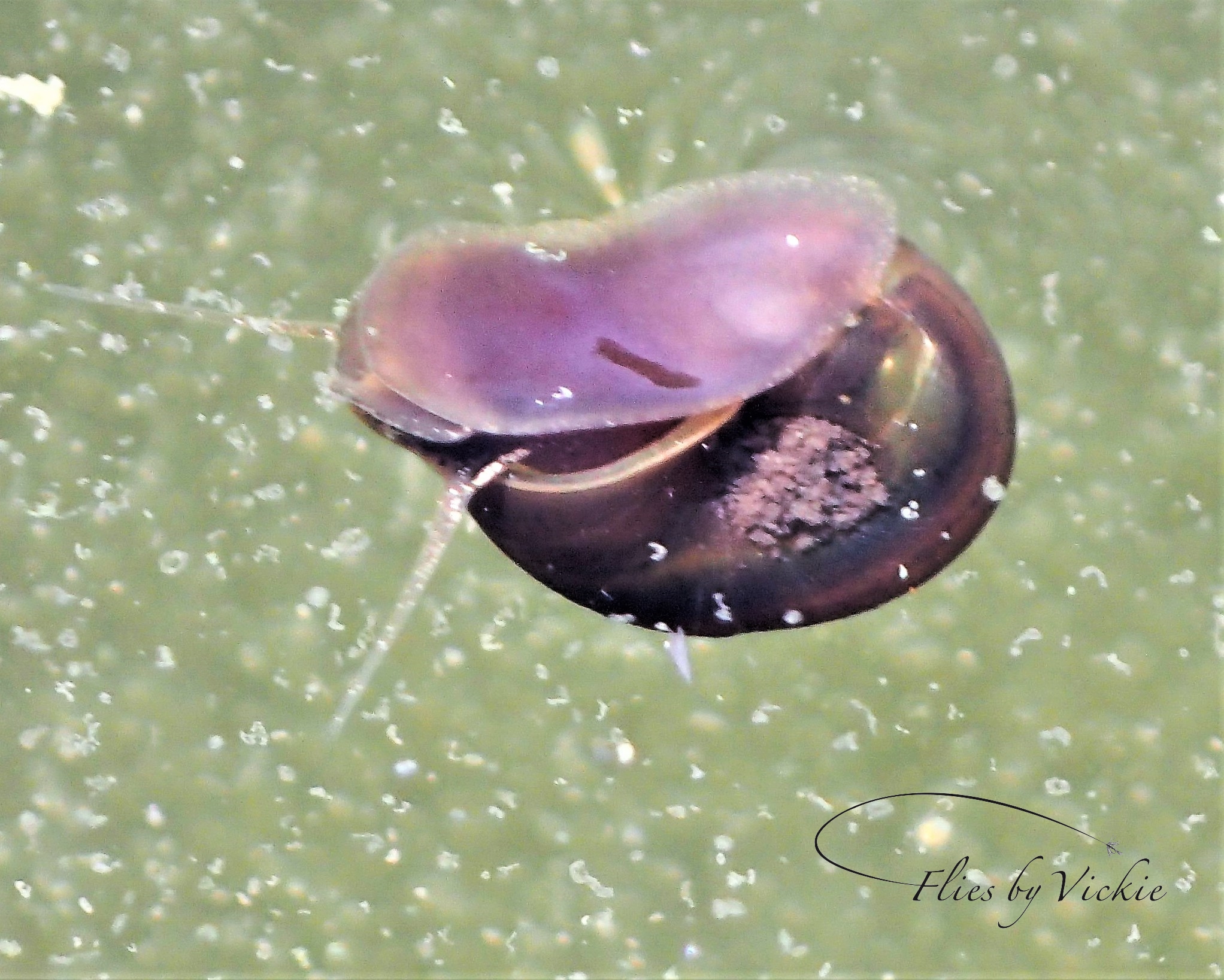
Snail
Small frogs, like this one perched on my finger, can also be found in trout’s stomach
Questions, or want to book a guided trip? Call Vickie at 503-680-7147 or send a message.
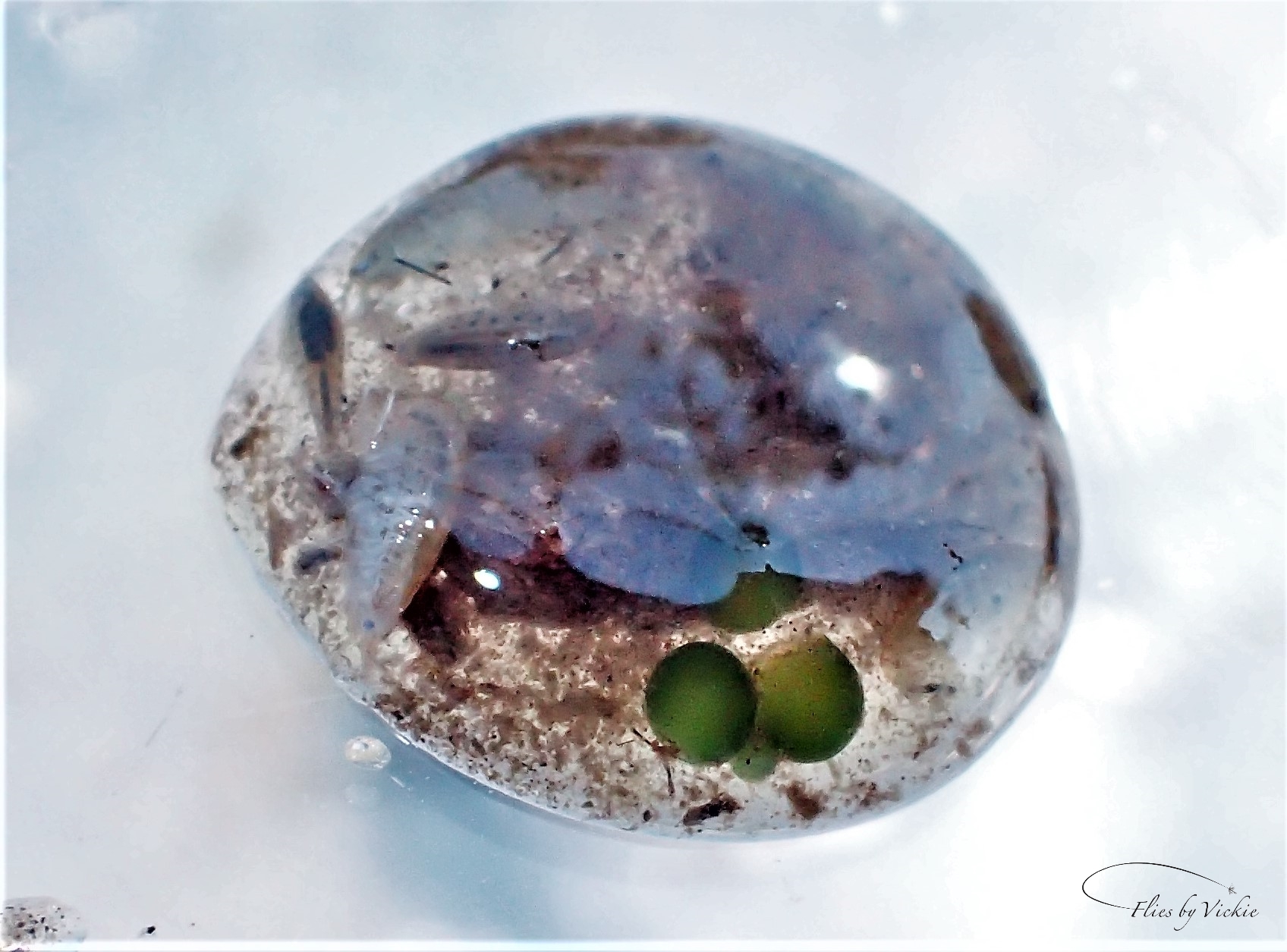
The richer the stillwater habitat, the greater the diversity of food. Organic material in the water is consumed by aquatic insects. Some aquatic insects feed on the algae. Others eat small pieces of decaying plant material or gather fine particles lying on the bottom. Still others are predators feeding on other live insects.
Notice the variety of life in just one drop of water! Can you make out the scuds?
Since trout feed where the food is, understanding where the prey lives tells you where to fish. Most aquatic insects live in shallow water near shorelines where light may still reach the bottom.
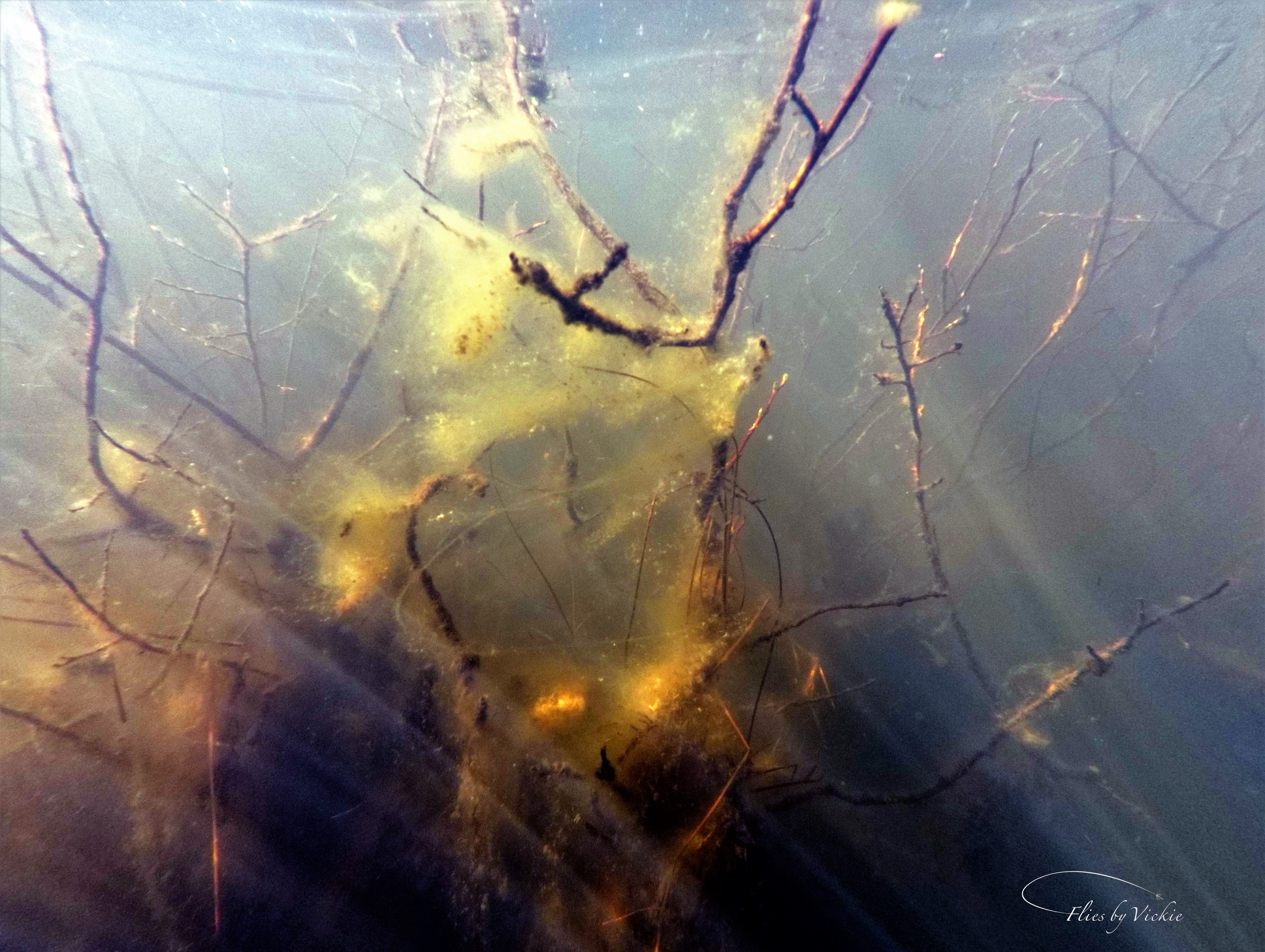
Underwater Structure
Hal Janssen in his book, Stillwater Fly-Fishing Secrets, (Hall Janssen Company, 2011), explains that muddy lake bottoms can harbor 3,000 to 4,000 organisms per square yard. This can include scuds (freshwater shrimp), midge larvae, immature damsels, and dragonfly nymphs.
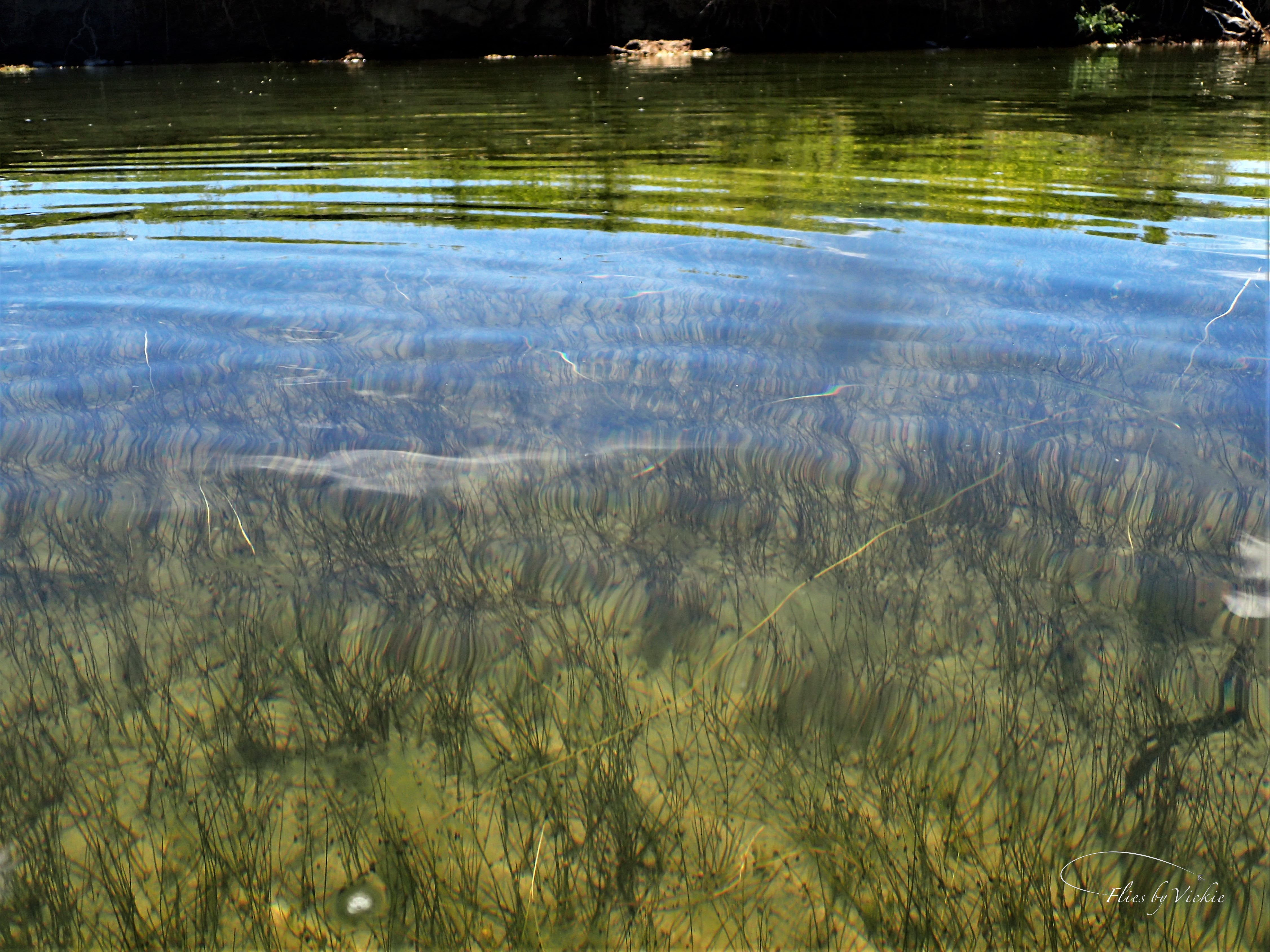
Shallow muddy bottoms provide a rich habitat
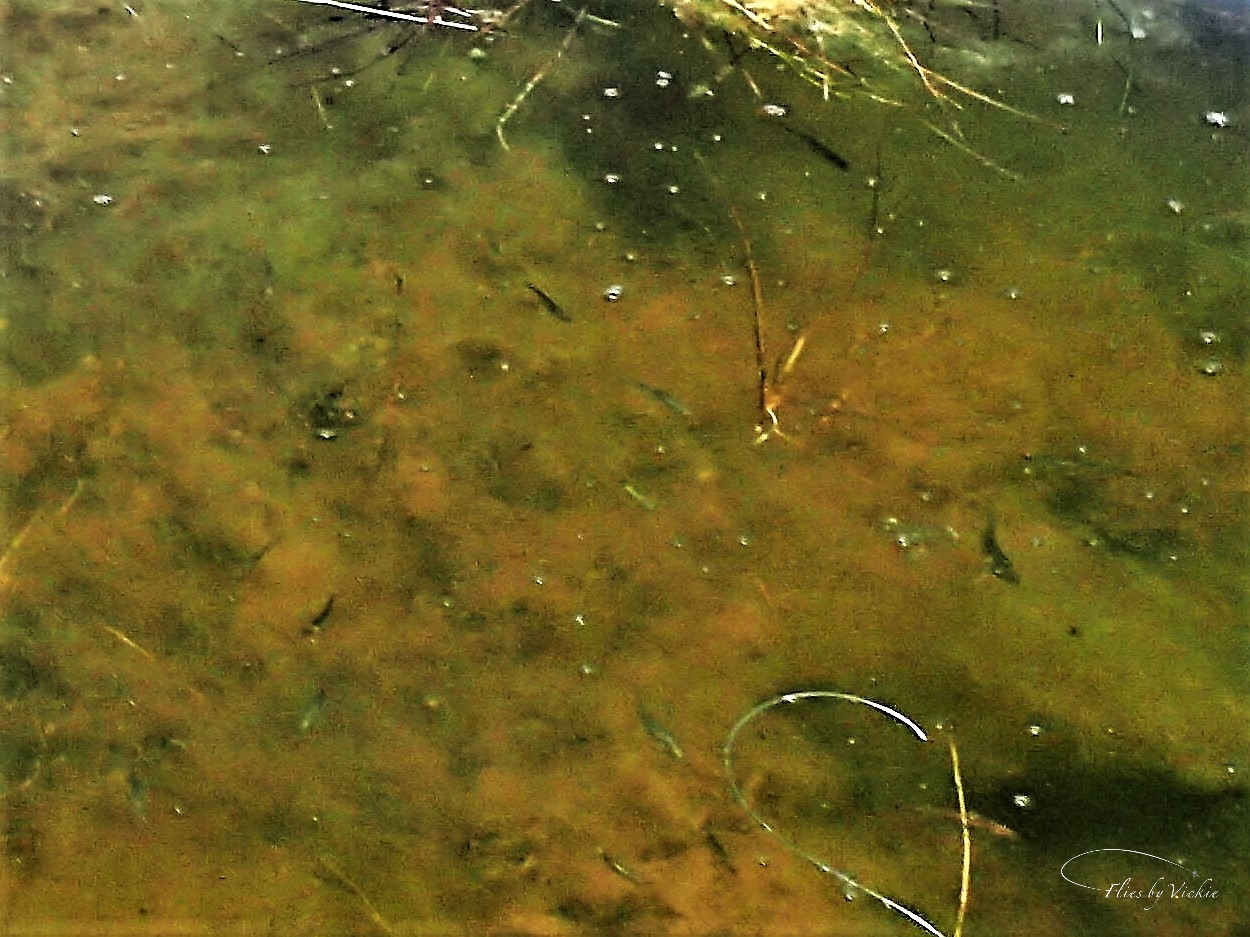
Shallow shoreline edges also provide a welcomed habitat for minnows and other small forage fish
The next series of blog articles will discuss in greater detail each of the four-aquatic insects trout love to eat: damselflies, caddisflies, mayflies and chironomids. Each article will contain information on line and fly pattern selection, presentation and fishing techniques.
Watch for the next article on Damselflies!
Click to print this article:

Copyright © 2018 Stillwater Adventures, all rights reserved
www.stillwateradventure.com
References and Citations
- Wikipedia - Robert J. Behnke. en.wikipedia.org. https://en.wikipedia.org/wiki/Robert_J._Behnke
- Native Fish Lab - California Fish and Game study of trout food. nativefishlab.net. http://www.nativefishlab.net/library/textpdf/15094.pdf
- ScienceDirect - Study of trout’s stomach contents. sciencedirect.com. https://www.sciencedirect.com/science/article/pii/S0380133083719118
- Hal Janssen - Stillwater Fly-Fishing Secrets. haljanssen.net. http://haljanssen.net/